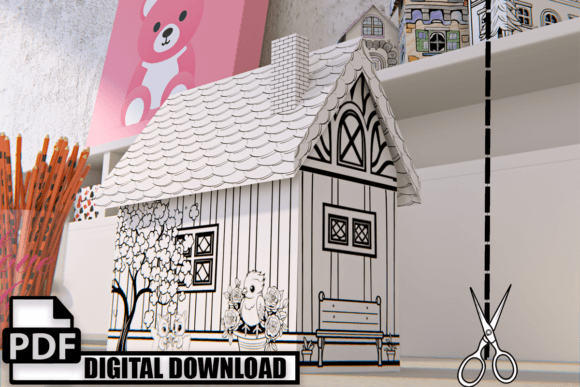
Coloring Paper 3D House Model: A Strategic Creative Tool for Kids and Educators
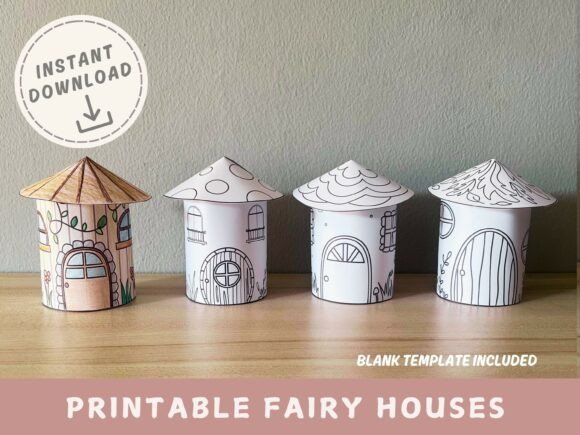
The Coloring Paper 3D House Model is more than just a fun arts and crafts activity—it's a versatile educational resource designed to spark imagination, foster creativity, and support skill development in children. This printable digital download offers a unique blend of entertainment and learning through its three-part structure: a pre-colored house model, a blank version for personal expression, and step-by-step assembly instructions. Whether you're an educator looking to enrich your classroom activities or a parent wanting to provide meaningful engagement at home, the Coloring Paper 3D House Model can be a powerful addition to your toolkit.
Strategic Value of the Coloring Paper 3D House Model
At first glance, the Coloring Paper 3D House Model may seem like a simple DIY project, but it carries significant strategic value when used with intention. It supports multiple developmental goals by combining elements of fine motor skills practice, creative thinking, and structured planning. The process of coloring, cutting, and assembling the model encourages children to follow directions, manage tasks sequentially, and develop hand-eye coordination—all while engaging their artistic flair.
From a broader perspective, this type of activity aligns well with modern educational strategies that emphasize experiential learning and hands-on engagement. In classrooms, it can serve as a cross-disciplinary tool, integrating art, design, literacy (through labeling rooms), and even basic math (measuring, counting pieces). For entrepreneurs or content creators in the education space, offering such a product taps into a growing market for interactive learning materials that are easy to distribute and highly adaptable.
How to Integrate the Activity Into Your Goals
When incorporating the Coloring Paper 3D House Model into your planning, consider how it can align with both short-term and long-term objectives. For educators, it might fit into a unit on architecture, urban planning, or even storytelling—students could create houses that reflect different historical periods or fictional worlds. For parents, it’s a way to encourage mindfulness and focus during screen-free playtime.
Here’s how you can approach its use strategically:
- Define clear learning outcomes: Are you aiming to improve concentration, introduce architectural concepts, or enhance color recognition? Clarifying your goals will help you maximize the activity’s impact.
- Plan around themes: Use the blank canvas version to tie the activity to seasonal events, literature studies, or STEM lessons. For example, students could build a futuristic house after reading about technology trends.
- Track progress over time: Encourage kids to revisit the model periodically, updating colors or adding new features. This fosters iterative thinking and long-term engagement.
Use Cases Across Industries
Beyond the classroom and home setting, the Coloring Paper 3D House Model has potential in other areas:
- Branding and marketing: Small businesses targeting families can offer these models as part of a branded kit or bundle. They serve as tangible takeaways that reinforce brand identity and customer loyalty.
- Customer experience: Subscription boxes or educational platforms can include these models to add value and interactivity to their offerings. The instant digital download format makes it ideal for online distribution.
- Professional development: Workshops for teachers or caregivers can demonstrate how to use these models effectively in lesson plans, emphasizing practicality and engagement.
Planning Tips for Effective Deployment
To ensure the Coloring Paper 3D House Model delivers maximum benefit, thoughtful planning is essential. Here are some practical tips:
- Choose the right audience: While suitable for most children aged 5–12, younger kids may need supervision for cutting and gluing. Adjust the complexity based on the age group involved.
- Set up a dedicated workspace: Provide ample lighting and a flat surface to make the activity easier and more enjoyable. Consider using child-safe scissors and glue for safety and ease of use.
- Pair with complementary resources: Combine the house model with books on architecture, city planning, or home life to deepen the learning experience. You could also link it to writing prompts or geography lessons.
- Encourage collaboration: Let kids work together to design a shared house, promoting teamwork and communication skills. This can be especially effective in group settings like summer camps or community centers.
What to Consider Before Relying on It
While the Coloring Paper 3D House Model is a valuable tool, it's important to assess whether it fits your specific needs before making it a core part of your activities. Ask yourself:
- Does it complement the existing curriculum or family routine?
- Are the necessary materials readily available or easily accessible?
- Can the activity be adapted to suit varying skill levels or interests?
Also, consider the digital-only nature of the product. Since it requires printing and assembly, users must have access to a printer and appropriate supplies. However, this also means there's no shipping cost or storage issues, which can be a major advantage for digital product sellers and educators managing limited physical resources.
Maximizing Long-Term Creativity and Engagement
One of the key strengths of the Coloring Paper 3D House Model is its adaptability. Once the initial model is built, it can become a springboard for ongoing creativity. For instance, children might want to redesign the house each season or repurpose it for role-playing games—acting out scenarios like hosting a tea party or building a miniature town.
As a creator or seller, you can enhance the product’s longevity by offering variations or additional downloadable content. Think about seasonal editions, themed versions (e.g., beach house, castle, treehouse), or even companion guides that help kids explore related topics. This not only increases repeat usage but also strengthens your position in the market as a provider of evolving, high-quality content.
Risks of Using Without Clear Intent
Using the Coloring Paper 3D House Model without a clear strategy can lead to missed opportunities. If treated as just another craft, it may fail to deliver the full range of benefits it offers. Risks include:
- Lack of engagement: Without context or purpose, the activity may feel repetitive or uninteresting to children.
- Wasted effort: Time invested in printing and assembling the model could be better spent if the activity doesn't align with learning or creative goals.
- Inconsistent results: Randomly assigning the task without guidance can result in uneven outputs, reducing its effectiveness as a teaching or branding tool.
By avoiding these pitfalls and ensuring the model is integrated thoughtfully, you can transform it from a one-time activity into a recurring source of value.
Practical Examples of Usage
Let’s look at a few real-world examples of how the Coloring Paper 3D House Model can be applied:
- Classroom setting: A teacher introduces the concept of sustainable homes. Students color and assemble the house model, then present ideas for eco-friendly upgrades using markers or labels.
- Home-based learning: A parent uses the model as part of a weekly “creative challenge,” where the child builds the house and writes a story about who lives there and why.
- Marketing campaign: A children's book publisher includes the house model as a free bonus download with their latest release, encouraging families to engage with the story world physically.
Decision-Making Guidance for Educators and Creators
If you’re considering adding the Coloring Paper 3D House Model to your offerings or curriculum, here’s a framework to guide your decision-making:
- Evaluate alignment with your mission: Does the activity support your educational philosophy or brand values? Is it something that resonates with your target audience?
- Assess scalability: Can you produce and distribute the model efficiently? Will it require additional training or resources to implement effectively?
- Test before launching: Try using the model in a small group or with a single child to gauge interest and usability. Gather feedback and iterate as needed.
- Measure impact: Track how often the model is used, what types of creations emerge, and whether it contributes to desired learning outcomes. This data will inform future decisions and improvements.
Positioning the Product for Maximum Impact
For marketers and business owners, positioning the Coloring Paper 3D House Model correctly is crucial. Emphasize its dual nature as both an educational tool and a fun activity. Highlight keywords like printable arts and crafts, DIY kid’s project, and creativity development in your descriptions and promotions to attract the right audience.
Consider bundling it with other resources, such as guided drawing templates or mini-books about architecture. These combinations increase perceived value and open new revenue streams. Also, think about leveraging social media by showcasing user-generated content—parents sharing photos of their kids' completed houses can drive organic interest and testimonials.
Operations and Logistics for Digital Sellers
Because the Coloring Paper 3D House Model is a digital download, it streamlines operations for creators and entrepreneurs. There’s no inventory management, no shipping delays, and minimal overhead costs. However, success depends on delivering a seamless user experience:
- Ensure the PDF files are high quality and clearly labeled.
- Provide detailed instructions that are easy to follow—even for those unfamiliar with paper crafting.
- Offer technical support for users experiencing issues with file downloads or printing.
- Include optional enhancements like tips for customization or links to video tutorials.
These operational considerations can significantly influence customer satisfaction and retention, especially in competitive markets where ease of use is a deciding factor.
Creating a Legacy of Learning and Joy
When used intentionally, the Coloring Paper 3D House Model becomes more than just a craft—it becomes a legacy. Children may return to it year after year, revisiting their childhood creativity and perhaps passing it down to younger siblings or friends. For educators and creators, it represents a commitment to providing tools that inspire growth and joy in learners.
Think of it as a platform for storytelling, problem-solving, and self-expression. Each colored house tells a story, each cutout piece reinforces spatial awareness, and each assembled model is a testament to perseverance and attention to detail. By embedding these qualities into your planning and delivery, you ensure that the Coloring Paper 3D House Model remains a meaningful part of your creative ecosystem.
Final Thoughts on Purposeful Implementation
The true power of the Coloring Paper 3D House Model lies in its thoughtful application. When paired with clear objectives and a supportive environment, it can become a cornerstone of creative development. Avoid using it as a filler activity; instead, treat it as a strategic component of your educational or product portfolio.
Whether you’re designing lesson plans, curating a digital product line, or simply looking for a meaningful way to engage your child, remember that every element of the Coloring Paper 3D House Model—from the choice of colors to the final assembly—can be leveraged to achieve greater outcomes. With careful planning and execution, this activity isn’t just a momentary distraction; it’s a lasting investment in creativity and learning.